The nexus letter that holds up. $549 flat.
A physician-led medical team reviews your records, synthesizes data from publicly available VA sources, and writes your independent medical opinion. Most letters in 14 days. If we can't support your case, you don't pay for the letter.
 Founded & led by Dr. Ryan — Founder & CEO, board-certified physician and Navy veteran →
$149 to start. You can arrange payments starting at just $37*
*Split the $149 deposit into 4 interest-free payments with Klarna at checkout, if approved. No extra cost from us. The deposit is refunded in full if our physician cannot support your case.
One thing to know before you start: your claim must be built on a condition a provider has already diagnosed and documented in your records.
Fully refundable $149 deposit. $400 for the letter, only if we can support your case. Competitors charge $800 to $1,500+.
Submit your records ($149)
Select your condition, answer a few targeted questions, and upload your records. The $149 deposit is refunded in full if we cannot support your case. Takes about 10 minutes.
We build your strongest case
A board-certified physician reviews your records against peer-reviewed medical literature and our curated pool of VA claim outcome data, then formulates the strongest viable path to service connection for your specific claim. If your case can't be supported, we tell you, and the $400 letter fee does not apply and your deposit is refunded in full.
Your letter, then payment ($400)
If we can support your claim, we write it. When it's complete, we send you a summary and explanation of the medical opinion before you pay. Pay the $400 balance to receive your signed nexus letter, with full clinical rationale and peer-reviewed citations.
Physiology
The biological mechanism. We explain, in plain clinical terms, how one condition produces or worsens another — a pathway a VA rater can follow step by step.
Published statistics
Peer-reviewed epidemiology — odds ratios and relative risks from the medical literature, cited to the actual studies — quantifying how strongly the conditions travel together.
Institutional evidence
Sources raters recognize: Department of Defense and VA research, major academic medical centers, and specialty-society guidelines that carry weight beyond any single study.
Applied to you
The layer that makes it a nexus letter: your records, your timeline, and your findings tied to the evidence above — including honest treatment of anything that cuts against the claim.
Every supportable letter concludes in the VA's own standard: the claimed condition is “more likely than not” — a greater than 50% probability — connected to service. If our physician cannot honestly write that sentence, we decline the case and refund your deposit in full.
| Flat Rate Nexus | Most Services | |
|---|---|---|
| Price | ✓ $549 | ✗ $800 - $1,500+ |
| Written by | ✓ Board-certified physician | ✗ Often unlisted credentials |
| Each letter | ✓ Individually drafted from your records | ✗ Template with your name swapped in |
| Data analysis before drafting | ✓ 295,756 BVA decisions mapped | ✗ None, writes what is asked |
| Viability gate | ✓ We tell you if records can't support a nexus | ✗ No screening, you pay either way |
| Turnaround | ✓ <2 weeks | ✗ 6-8 weeks |
- Sleep apnea secondary to PTSD, depression, or chronic sinusitis and rhinitis
- Migraines secondary to PTSD or head injury
- Tinnitus and hearing loss from documented noise exposure
- Knee, hip, or back conditions secondary to one already service-connected joint
Each letter addresses one condition. Veterans with several unrelated conditions usually need separate letters, and we will tell you which ones are worth doing.
Auditory / ENT
Cardiovascular
Dermatologic
Gastrointestinal
Genitourinary
Musculoskeletal
Neurological
Rheumatologic
Renal
Multi-System
Flat Rate Nexus is led by its founder and built around a simple rule: every letter meets the same high bar, no matter who is on the case. As we grow, that bar does not move, and that is exactly why we are growing.

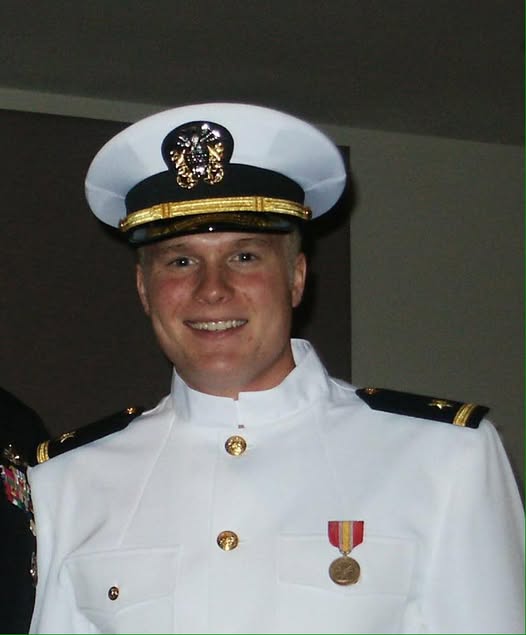
"I started Flat Rate Nexus because too many veterans were overpaying for letters that didn't hold up. Every case gets a genuine physician review, your records weighed for medical plausibility against data we synthesize from publicly available VA sources, in the context of how the VA actually decides claims. If the evidence isn't there, we tell you before you spend a dollar on the letter. That standard is the company, and it's exactly what we protect as we add physicians and staff."
Board-Certified Physicians (MD/DO)
Every nexus letter is reviewed and signed by a board-certified physician trained in primary care — family medicine and internal medicine. That is full-spectrum training across the whole range of conditions we see, from sleep and respiratory to mental health, musculoskeletal, cardiac and endocrine, which is exactly how secondary claims travel. As we add physicians, each is held to the same review standard, so quality never depends on who is assigned.
Doctor of Physical Therapy (DPT)
For musculoskeletal cases, a DPT may author the opinion, and a board-certified physician independently reviews, validates, and co-signs it. Two doctoral-level signatures on every DPT-authored letter.
RN Liaisons
Registered nurses on our team handle tracking, communication, and coordination, so you always know where your case stands and have a dedicated point of contact between you and the physician team.
Physician credentials redacted. All veteran information is fictional.
A nexus letter is an independent medical opinion from a physician stating that your current medical condition is "at least as likely as not" connected to your military service. The VA uses nexus letters as evidence when deciding disability claims. A strong nexus letter explains the medical reasoning behind the connection and is supported by your records.
Not always. If your condition qualifies for presumptive service connection (for example, under the PACT Act for toxic exposure or burn pit conditions), the VA may grant your claim without one. Your Veterans Service Organization (VSO) can help determine whether a nexus letter would strengthen your claim. For most non-presumptive direct and secondary claims, a nexus letter significantly improves your chances of approval.
Often, a great deal. "Probative value" is the persuasive weight the VA gives a medical opinion. When a claim is denied because the examiner does not see a connection, the deciding factor is the strength of the medical argument on the other side. A letter that explains the physiological mechanism, cites the peer-reviewed literature, and answers the examiner's likely objections carries more probative weight - and probative weight is what changes outcomes. For an obvious, straightforward case, your own doctor's letter may be all you need. But many physicians are not familiar with how the VA weighs a nexus opinion, and for anything less than clear-cut, a professionally built and argued letter is frequently the difference between a denial and a grant. Choosing who writes your letter is one of the few things in the process you fully control.
Letters are written by our doctoral-level providers - board-certified physicians and a Doctor of Physical Therapy (DPT) for musculoskeletal cases. Every letter is reviewed and signed by a board-certified physician in a primary-care specialty, so it always carries a physician's independent opinion. This is not a template factory - each letter is individually drafted based on your specific records and medical history. Our team has no treatment relationship with you, which is what makes this an independent medical opinion.
No. Our providers write their own letters, following a structure we know holds up to VA scrutiny. You're welcome to send citations, records, or even notes you drafted (AI-assisted or not) to help explain a concern - we read all of it and it informs the letter. But we won't simply put our signature on a veteran- or AI-generated letter; a nexus opinion only carries weight when it is the provider's own independent analysis. We'll be straight with you about AI, because we use it and you should know how. We use it to research the medical literature, to pull and verify citations, to help synthesize thoughts and ideas as the argument takes shape, and to pressure-test that argument before the VA does. That is the part it is genuinely good at, and we would be worse at this without it. Your records are read by people, at several levels. The letter itself is written by the physician. There are AI engines out there that will generate a nexus letter for you, and they are riddled with hallucinated citations and factual mistakes - and even where the facts hold up, they read like a book report: a summary of your records rather than a physician's reasoned opinion about your particular case. A VA reviewer can tell the difference. What you receive is a board-certified physician's own independent medical opinion, in their own words, signed under their own name and NPI.
Most letters are completed within two weeks from the date we receive your complete records. If a letter is not completed within 30 days of our receiving your complete records, we refund the $149 deposit.
If after reviewing your records our team determines that a supportive nexus opinion cannot honestly be provided, you are not charged the $400 letter fee and your $149 deposit is refunded in full. You will receive a written explanation of why we could not support the claim and, where possible, specific guidance on what additional documentation or steps might strengthen a future request. If we can't support your case, you keep a physician's written analysis of why and what would strengthen it.
Three things matter most: records showing a current diagnosis (clinic notes, imaging, labs, sleep studies, a problem list), something documenting the in-service event or exposure your claim is built on, and your VA records (rating decisions, C&P results). A DD-214 is helpful but not a requirement to get started. Beyond that, send whatever you have - service treatment records, private doctor's notes, buddy statements. We'd rather have 200 pages than 5, and you can always upload more later.
A few important ways. Every letter is reviewed and signed by a physician who is board-certified in a primary care specialty whose scope of practice covers every condition we write letters for - nothing is outside our lane. Our letters are individually drafted from your records - not templates with your name swapped in. We operate on a flat-rate model with no complexity surcharges, and our standard turnaround is two weeks when many services take six to eight. We also run every case through a viability review before writing - if the evidence doesn't support a nexus opinion, we tell you why and don't charge you the letter fee. Our current team includes a Doctor of Physical Therapy (DPT) alongside our physicians, and as we grow we plan to bring on additional specialists and perspectives.
Yes. The VA processes disability claims from veterans in more than 100 countries, and record-review nexus letters work the same regardless of where you live. Under Nieves-Rodriguez v. Peake, a physician can render a medical opinion based on thorough record review without any in-person contact. We serve US veterans in the Philippines, Germany, Japan, Korea, Mexico, Thailand, Guam, the UK, and other countries at the same flat rate. Records must be in English (or translated). Residents of countries under US sanctions cannot be served. Read the full overseas guide.
Email info@flatratenexus.com. We typically respond within 1–2 business days. You can also call or text (757) 540-1077 and leave your name and email — we reply by email, not by phone. Please don’t send medical records by email; you’ll upload those securely through the intake form.
Our secure HIPAA-compliant intake form opens in a new tab. No documents needed right away — you can upload records during the process.
Open Secure Intake Form →Fully refundable $149 deposit at intake. $400 for the letter only if we can support your case.
Here's what happens next:
Save info@flatratenexus.com to your contacts so our emails don't go to spam.